philosophy
from downstream to upstream
Our society must shift upstream rather than reacting to problems and crises. We can make this shift if leaders and teams leverage upstream approaches – promotion and prevention – to enhance care and reduce harm for all people.
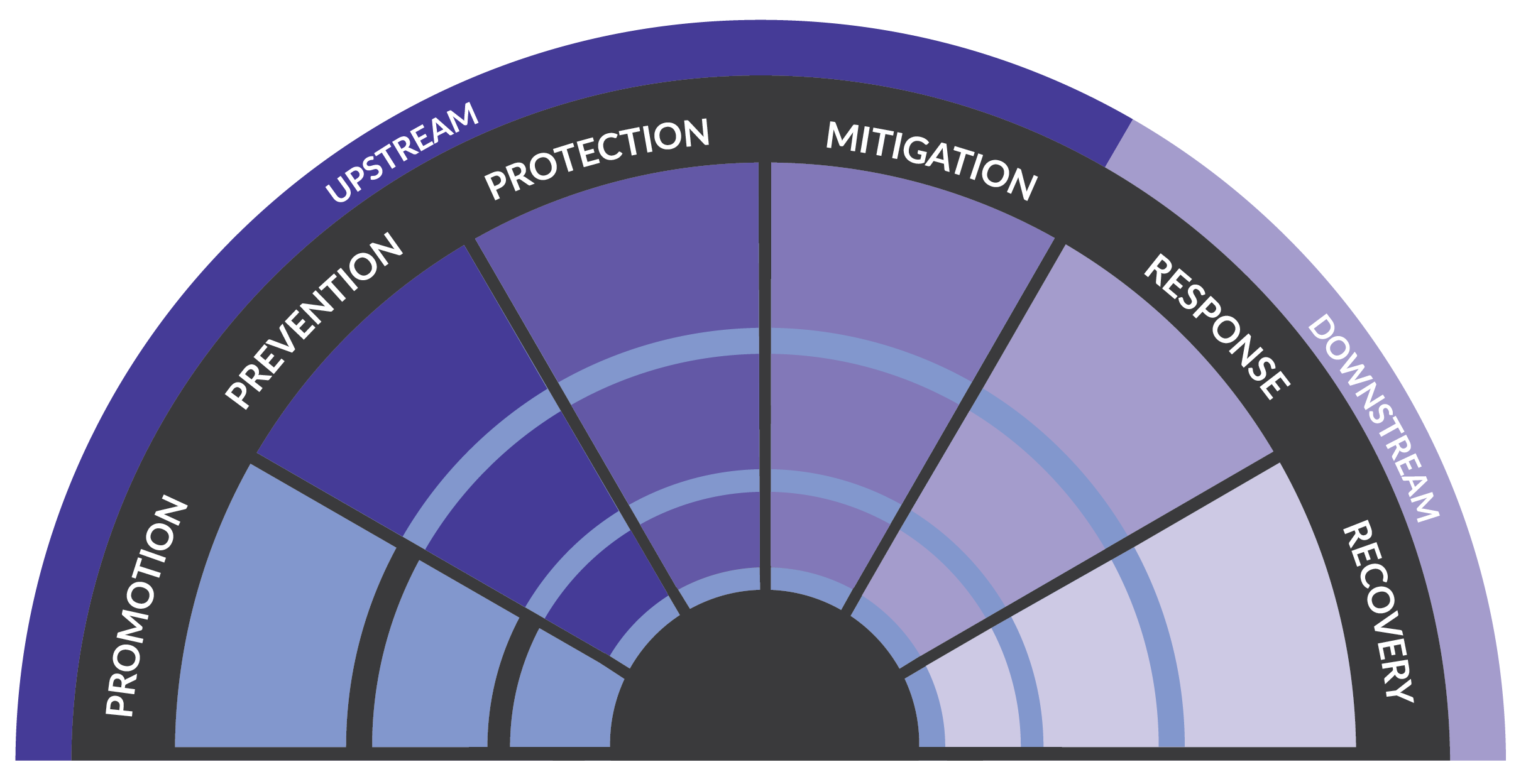
Downstream, we respond to crises and recover from harm that has already happened. Upstream, we act before the harm: protecting and mitigating, and further up still, preventing and promoting. The further upstream we go, the fewer problems arrive downstream.
toward promotion & prevention
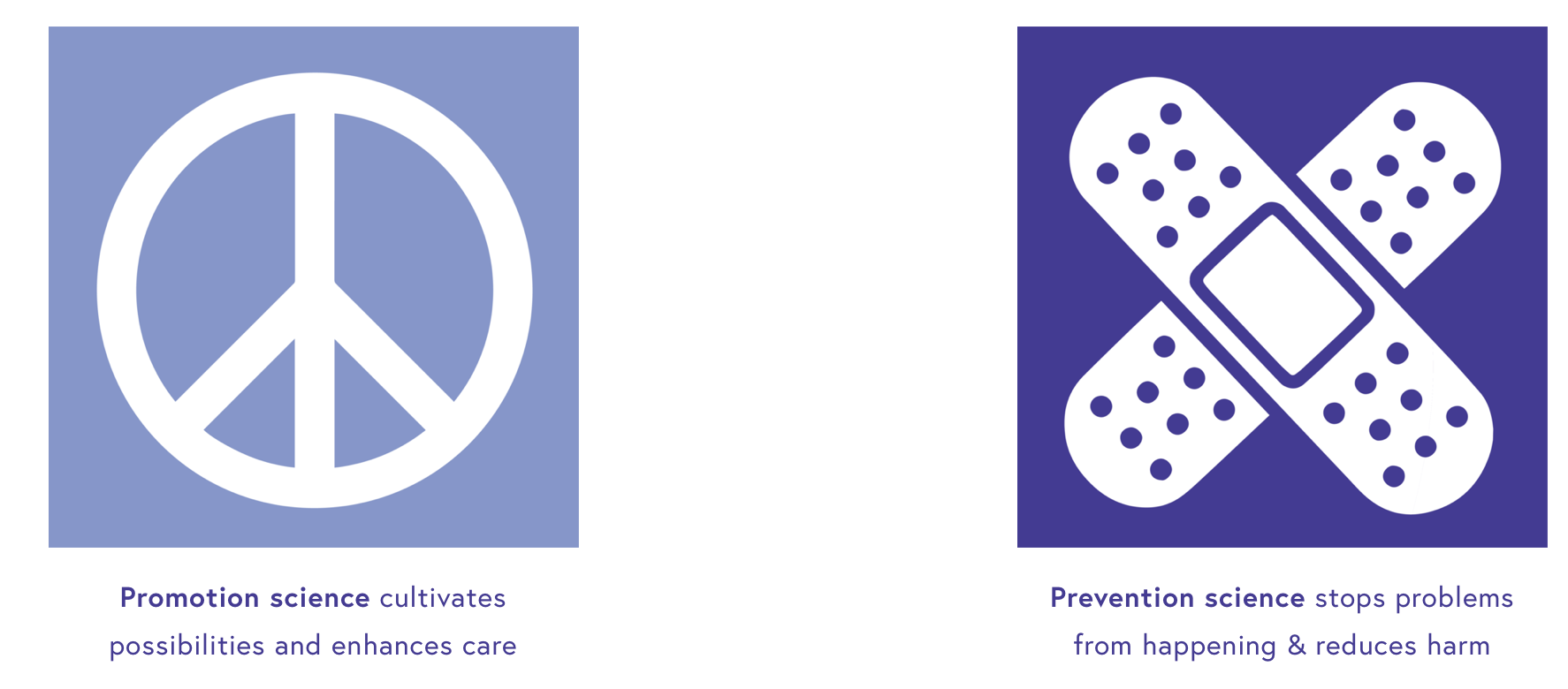
Prevention and promotion are the two upstream approaches. Prevention science works to reduce a problem; promotion science works to grow the possibility on the other side of it. Every problem my research and practice addresses has such a possibility, and taking both seriously is what it means to move toward promotion and prevention.
- social behavior : prevent antisocial behavior and promote prosocial behavior
- mental health : prevent mental ill-health and promote mental well-being
- safety : prevent violence and promote peace
across levels
Upstream is a direction rather than a single place, and there are several levels at which we can act along the way. Promotion and prevention can be practiced at the level of behavior, by prompting and reinforcing the prosocial acts we want more of; at the level of relationships, by shaping how bystanders, dyads, and groups conceive of help and harm; at the level of motivation, by understanding the prosocial mindsets that move people to promote care and prevent harm; at the level of programs, by designing interventions that give young people and adult allies a promotion track alongside a prevention track; at the level of communities, by understanding how residents conceive of safety and which approaches to violence intervention they will support; and at the level of structures, by confronting the political and commercial determinants that keep problems in place. My own program of research has moved along that ladder, from rewarding kindness in elementary classrooms to analyzing the commercial determinants of mental health, and the research page traces it level by level.
in practice
This philosophy guides our work at Promote Care & Prevent Harm, where we empower leaders to create a more proactive culture through research and programs that not only prevent violence, disease, mental ill-health, and isolation, but promote peace, health, mental wellbeing, and connection in schools and communities. It also guides my teaching in the Public Health stream of Binghamton University’s First-year Research Immersion program, where first-year students learn to design, conduct, and publish community-engaged research on promotion and prevention.
values
I believe the people we collaborate with, the research we do, the participants we collect with, the questions we ask, the assumptions we hold, and the way we conduct research matters.
health as a human right: I believe complete health, the presence of positive wellbeing and the absence of illness, is a human right, and that research should help actualize it for all people.
research as a process: I believe the scientific method gives us the best chance to diagnose problems, identify aspirations, and advance our collective wellbeing. But science is one part of the process of transformation, not its end point.
research transparency and reproducibility: I believe workflow and organizational activities should be transparent and reproducible by following best practices from the Center for Open Science and BITSS.
collaborative science: I believe the best science comes from a diverse team of scholars with varying experiences, perspectives, disciplines, methods, and analytical approaches.
critical realist: I reject objectivist and reductionist thinking. Health problems are real, and so are their causes, which run from biology to social structure and exceed what any one study can measure. The world exists apart from our models, our knowledge of it is partial and shaped by society, and the job of research is to uncover the mechanisms and contexts behind what we observe. Culture and context matter, but health is not only a matter of perspective.
integrated lens: I favor a psychological analysis of health and wellbeing, centered on prosocial motivation and structural thinking, but I integrate social determinants, political economy, commercial interests, cultural context, historical legacies, and relative power into the research.
power sharing: I aim to include stakeholders in the research process as citizen scientists through participatory action research and other community-based methods.